

Aircraft Hangar Fans and Heaters
Aircraft hangar fans have to move air under 25 to 40 ft ceilings, where heat collects at the roof. In winter, your heaters warm the steel above the aircraft instead of the crew below. Summer flips it, and the floor turns hot and still.
Hangar ceiling fans push that heat back down, but they cannot replace heat lost at the door. Every opening pulls cold air across the floor. Fueled aircraft also release vapor that exhaust fans must carry out.
In a hangar, fans, heaters, exhaust, and make-up air have to be sized together as one system. If you already know your ceiling height and door size, call 847-674-0000 now. The equipment list, fan sizing, and heating guidance follow below.
Need a price or have questions? Contact Us
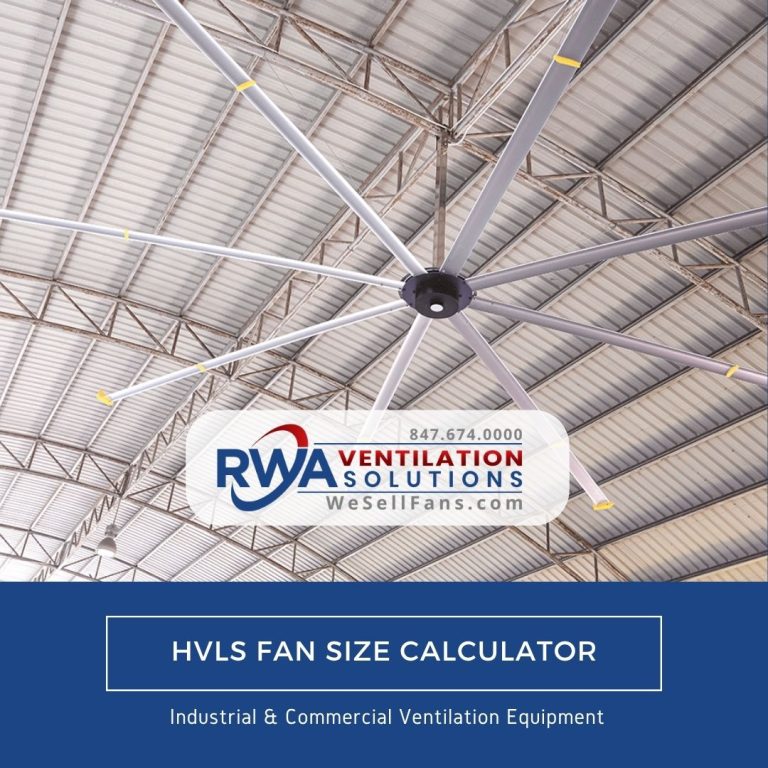
HVLS Fans for Airport Hangers


Equipment an Aircraft Hangar Needs
An aircraft hangar needs 5 types of equipment to stay heated, comfortable, and safe. Each one solves a different problem.
Skip one, and the others cannot cover what’s missing.
| Equipment | Job in the hangar |
|---|---|
| HVLS ceiling fans | Push roof heat down in winter, cool crews in summer |
| Unit and infrared heaters | Heat the floor, aircraft, and work zones |
| Door heaters | Recover heat lost when the hangar door opens |
| Wall and axial exhaust fans | Remove fuel vapor and hold negative pressure |
| Make-up air units | Replace exhausted air, heated before it enters |
HVLS Fan Size for Hangar Ceiling Heights
Most aircraft hangars with 25 to 40 ft ceilings need 20 or 24 ft HVLS fans. Floor area decides how many you hang. Coverage below comes from published specs for the fans we stock.
| Fan size | Open floor it covers |
|---|---|
| 20 ft fan | 15,625 sq ft |
| 24 ft fan | 22,500 sq ft |
Divide your floor by one fan’s coverage and round up, or let the HVLS fan size calculator do it. A 24,000 sq ft hangar needs two 24 ft fans. Then check four points before you pick a spot.
- Tail height: blades must clear the tallest tail you park.
- Door and crane: keep blades clear of the door track and any overhead crane.
- Walls: hang each fan 1.5 times its diameter from a wall, or 36 ft for a 24 ft fan.
- Shop bays: smaller HVLS ceiling fans from 14 ft fit lower ceilings.
Get One Hangar Spec for Fans and Heat
Hangar projects often split fans, heaters, and exhaust across separate vendors. Then nobody checks that the pieces balance. The crew finds out in January, when the door opens and the floor goes cold.
RWA represents several manufacturer lines across HVLS fans, heating, exhaust, and make-up air. Our application engineers size them as one system, from ceiling height to door width. You get one spec and one point of contact.
Every unit ships with the manufacturer’s warranty.
Heating and Make-Up Air for Hangars With Fueled Aircraft
A hangar with fueled aircraft needs heat and exhaust sized together. Exhaust fans pull fuel vapor out and keep the hangar at slight negative pressure. Heated make-up air replaces it, so the floor stays warm.
| Hangar situation | Heat source |
|---|---|
| Large hangar with high ceilings | Infrared heaters |
| Small hangar, shop, or parts room | Unit heaters |
| Door open to tow aircraft | Overhead door heaters |
| Exhaust running for fuel vapor | Heated make-up air units |
Fueled aircraft also limit where heaters can go. Mounting height and burner type near fuel vapor follow NFPA 409 and local code. We check both before any unit ships.

Scott Williamson
Scott Williamson is a licensed Professional Engineer specializing in high-temperature industrial ventilation systems. His expertise has been featured in HubSpot and Tech Bullion.
- Balancing Dampers
- Bitcoin Mining Equipment
- CNC Mist collector - Time to upgrade?
- Restaurant Air Curtains - Are they worth it?
- Direct Gas-Fired MUA - Efficent Heating Solution
- Rooftop Make Up Air Units - Is it the right choice?
- Industrial Dampers - Which one is right for your application?
- Industrial Air Curtains - Are they enough for heavy duty applications?