
Warehouse Ventilation Compliance Checklist
22 checks against OSHA, the International Mechanical Code, NFPA 13, and state heat rules.
For informational use only. Does not replace a review by a licensed engineer or certified industrial hygienist.
OSHA sets no air change rate for general warehouse space. The rules that apply sit in the forklift, heat, flammable storage, welding, and machine guarding standards. Your local mechanical code adds outdoor air rates on top of that. This checklist puts all of them in one walkthrough, ranked by risk.
Print it, walk the floor, and mark each item. Every NO is a gap with a named standard behind it.
01Forklift Exhaust and Battery Charging
CRITICAL| Requirement | YES | NO | N/A | Notes |
|---|---|---|---|---|
| 1. Forklift batteries are charged only in an area designated for charging. Charging at random aisle outlets spreads hydrogen release across the building, where no exhaust is sized to remove it. OSHA 29 CFR 1910.178(g)(1) | ||||
| 2. The charging area has ventilation that disperses fumes from gassing batteries. Lead-acid batteries release hydrogen near the end of a charge. Hydrogen rises, so exhaust pickup belongs high in the charging area, not at floor level. OSHA 29 CFR 1910.178(g)(2) | ||||
| 3. The charging area has electrolyte flushing and neutralizing, fire protection, and barriers that keep trucks off the chargers. OSHA lists these in the same paragraph as the ventilation requirement. An inspector checks them together. OSHA 29 CFR 1910.178(g)(2) | ||||
| 4. Smoking is prohibited and posted in the charging area. Hydrogen that collects under a roof deck needs only one ignition source. The sign is a citable item on its own. OSHA 29 CFR 1910.178(g)(10) | ||||
| 5. Carbon monoxide from propane, gasoline, or diesel forklifts has been measured and stays under the OSHA limit of 50 ppm (8-hour average). CO builds fastest in winter, when dock doors stay closed and exhaust fans get shut off to save heat. Test in the worst month, not the easiest one. OSHA 29 CFR 1910.178(i) and 1910.1000 Table Z-1 | ||||
| 6. Forklift operators are trained on carbon monoxide and diesel exhaust buildup in closed areas. OSHA names closed environments and poor ventilation as a required training topic. The training record is what an inspector asks for. OSHA 29 CFR 1910.178(l)(3)(ii)(H) | ||||
| 7. Exhaust fans serving forklift aisles run any time fuel-powered trucks operate indoors. A fan on a manual switch gets turned off on the first cold morning. Interlock it to the truck schedule or a CO sensor so it cannot be forgotten. Good practice supporting 1910.178(i) |
02Heat Stress
HIGH| Requirement | YES | NO | N/A | Notes |
|---|---|---|---|---|
| 8. The facility has a written heat illness prevention plan. No final federal heat standard exists yet, but OSHA cites heat hazards under the General Duty Clause. California requires a written plan for indoor work at 82°F, and several other states have their own heat rules. OSH Act Section 5(a)(1); Cal/OSHA Title 8 Section 3396 | ||||
| 9. Someone owns the response when the National Weather Service issues a heat advisory. OSHA's revised Heat National Emphasis Program, effective April 10, 2026, runs through 2031. Inspectors open heat inspections in targeted industries on advisory days. OSHA Directive CPL 03-00-024 (2026) | ||||
| 10. Temperature and heat index are measured and logged at work locations on hot days. The thermostat on the office wall does not read the pick aisle. California requires measurement where employees work once the space reaches 87°F. Cal/OSHA Title 8 Section 3396 | ||||
| 11. Temperature is checked at worker height on mezzanines and upper rack levels. Heat stratifies under the roof deck. A picker on a mezzanine can work well above the temperature the floor reading shows. Good practice | ||||
| 12. Engineering controls, such as exhaust fans, HVLS fans, or tempered make-up air, are in place and sized for the summer heat load. California requires engineering controls to bring indoor temperature below 87°F where feasible. Everywhere else, engineering controls are the first thing an inspector asks about under the General Duty Clause. Cal/OSHA Title 8 Section 3396; OSH Act Section 5(a)(1) |
03General Ventilation and Outdoor Air
HIGH| Requirement | YES | NO | N/A | Notes |
|---|---|---|---|---|
| 13. Mechanical ventilation delivers the outdoor air rate your adopted mechanical code requires. The 2021 IMC sets warehouses at 0.06 CFM per sq ft plus 10 CFM per person. Shipping and receiving areas double the area rate to 0.12 CFM per sq ft. Confirm which code edition your jurisdiction adopted. IMC Table 403.3.1.1 (2021) | ||||
| 14. Make-up air is supplied to match exhaust, so the building does not run negative. A negative building pulls air through dock seals and doorways, drags in truck exhaust, and starves the exhaust fans. Doors that are hard to open are the first sign. Good practice | ||||
| 15. Outdoor air intakes sit the code-required distance from loading docks, parking, and exhaust outlets. An intake next to the dock brings idling truck exhaust straight into the building. The mechanical code sets minimum separations for exactly this reason. IMC Section 401.4 | ||||
| 16. Inside flammable liquid storage rooms have exhaust sized for at least six air changes per hour. This is the only air change rate OSHA sets that applies to most warehouses. Gravity vents must run to the building exterior. OSHA 29 CFR 1910.106(d)(4)(iv) | ||||
| 17. A maintenance welding area has mechanical ventilation of at least 2,000 CFM per welder where required. The requirement applies when the space has less than 10,000 cubic feet per welder or a ceiling under 16 feet. Local exhaust hoods can substitute. OSHA 29 CFR 1910.252(c)(2) | ||||
| 18. Ventilation was rechecked after the last change to racking, layout, or shift count. High-bay racking blocks the air path the original design assumed. A system balanced for one shift is short the day a second shift or a charging row is added. Good practice |
04Fans, Guards, and Doors
MEDIUM| Requirement | YES | NO | N/A | Notes |
|---|---|---|---|---|
| 19. Every fan with blades less than 7 feet above the floor or work level has a guard with openings no larger than 1/2 inch. This covers floor fans, wall exhaust fans on mezzanines, and portable coolers. Guards with wide wire spacing fail the 1/2 inch rule. OSHA 29 CFR 1910.212(a)(5) | ||||
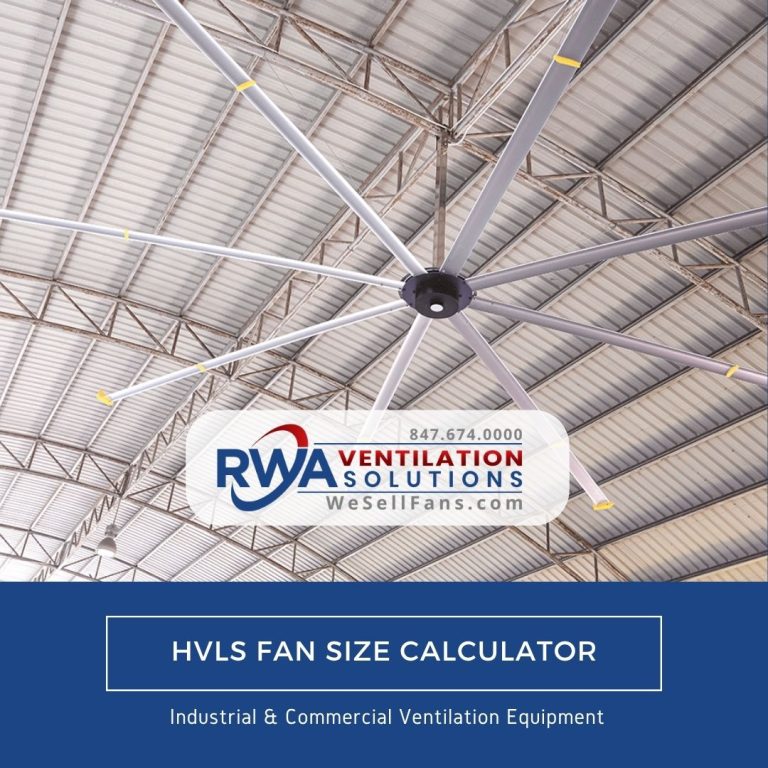
| 20. HVLS fans shut down on a sprinkler waterflow signal and sit centered between four sprinklers with at least 3 feet of clearance to the deflectors. A running HVLS fan pushes sprinkler spray off the fire. NFPA 13 caps covered fans at 24 feet in diameter. NFPA 13 (2013 edition and later) | ||||
| 21. Exhaust fan belts, bearings, and backdraft dampers are inspected on a written schedule. A slipping belt cuts airflow while the fan still looks like it is running. A damper stuck open lets winter air pour in when the fan is off. Good practice | ||||
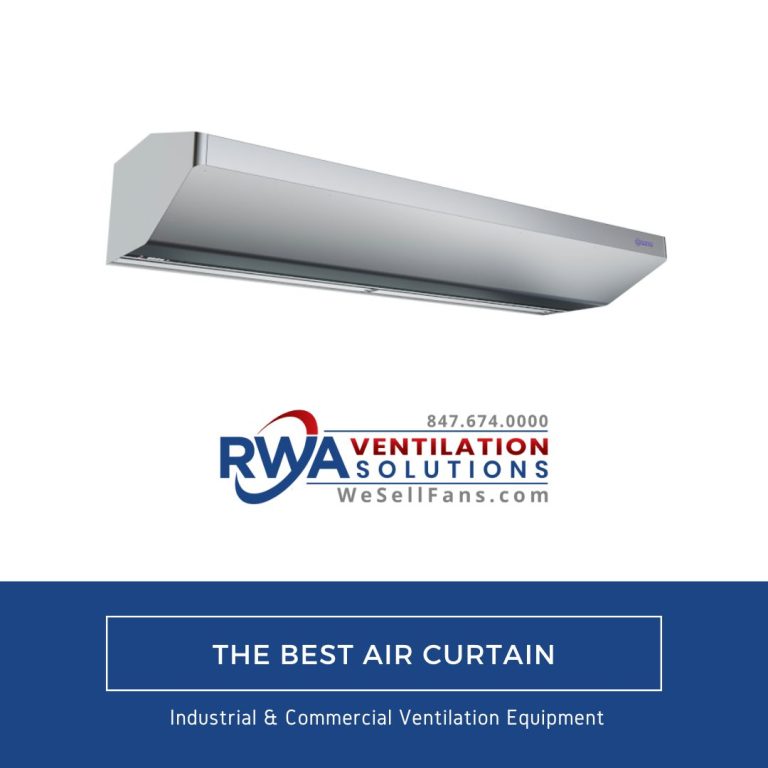
| 22. Dock doors that stay open for long periods have air curtains, door heaters, or dock seals. An open dock door lets in summer heat, winter cold, and truck exhaust. Each one undercuts the heat and CO checks above. Good practice |
YES = meets the requirement. NO = gap, corrective action needed. N/A = does not apply to this facility. Items marked "Good practice" carry no citation of their own but protect a cited item.
How Many Air Changes per Hour Does a Warehouse Need
A warehouse has no single required air change rate. OSHA sets six air changes per hour only for inside flammable liquid storage rooms. The mechanical code sets outdoor air by floor area and headcount, not by air changes.
Air change targets you see online are design rules of thumb. Size exhaust from the summer heat load, the forklift fleet, and any process fumes, then check the result against the code minimums below.
| Space | Minimum | Source |
|---|---|---|
| Warehouse floor | 0.06 CFM per sq ft plus 10 CFM per person, outdoor air | IMC Table 403.3.1.1 (2021) |
| Shipping and receiving | 0.12 CFM per sq ft plus 10 CFM per person, outdoor air | IMC Table 403.3.1.1 (2021) |
| Storage rooms | 0.12 CFM per sq ft, outdoor air | IMC Table 403.3.1.1 (2021) |
| Flammable liquid storage room | 6 air changes per hour, exhaust | OSHA 1910.106(d)(4)(iv) |
| Welding area, under 10,000 cu ft per welder | 2,000 CFM per welder | OSHA 1910.252(c)(2) |
| Battery charging area | Adequate to disperse gassing fumes | OSHA 1910.178(g)(2) |
Marked a NO on Your Checklist
Send us the items you marked NO. We will spec the equipment that closes each gap, across several US manufacturer lines.
- Exhaust and make-up air sizing for heat and forklift CO
- Battery charging room ventilation
- HVLS fan layout that clears your sprinkler heads
- Air curtains and door heaters for dock doors
Call 847-674-0000 or request a quote.
See the full range of warehouse ventilation equipment, HVLS fans, make-up air units, and industrial air curtains.
Disclaimer
This checklist is a general educational reference. It is not legal, engineering, or safety consulting advice, and it does not certify compliance with OSHA 29 CFR 1910, NFPA standards, the International Mechanical Code, or any state or local rule.
Answering YES to every item does not guarantee compliance or protect against citations. Standards change, and your jurisdiction may adopt a different code edition. Citations were checked in September 2026.
For facility-specific obligations, consult a licensed engineer, certified industrial hygienist, or certified safety professional. NFPA 13 is published by the National Fire Protection Association, which is not affiliated with this checklist.