HVLS Industrial Ceiling Fans ( High Volume Low Speed) Air Movement
We provide HVLS fans from USA manufacturers that deliver high-volume, low-speed ceiling fans that slash HVAC expenses by ~30% while ensuring optimal air circulation across your facility.
One 24 foot fan covers up to 22,500 square feet. That means fewer units on a big floor, and fewer places for air to stall.
Variable speed controls tie into building automation, so you can run the same fan slow in winter to pull warm air down off the ceiling. Diameter does the work, not blade speed.
Need help selecting the best industrial HVLS ceiling fan?
Contact our technical team to find the perfect fan for your specific facility requirements.
The table shows a range for each type of building.
Use the HVLS fan size calculator to get the exact diameter and the number of fans for your space. You can also send us your ceiling height and floor area. An application engineer will size it for you.
Large Fan Key Features and Airflow Benefits
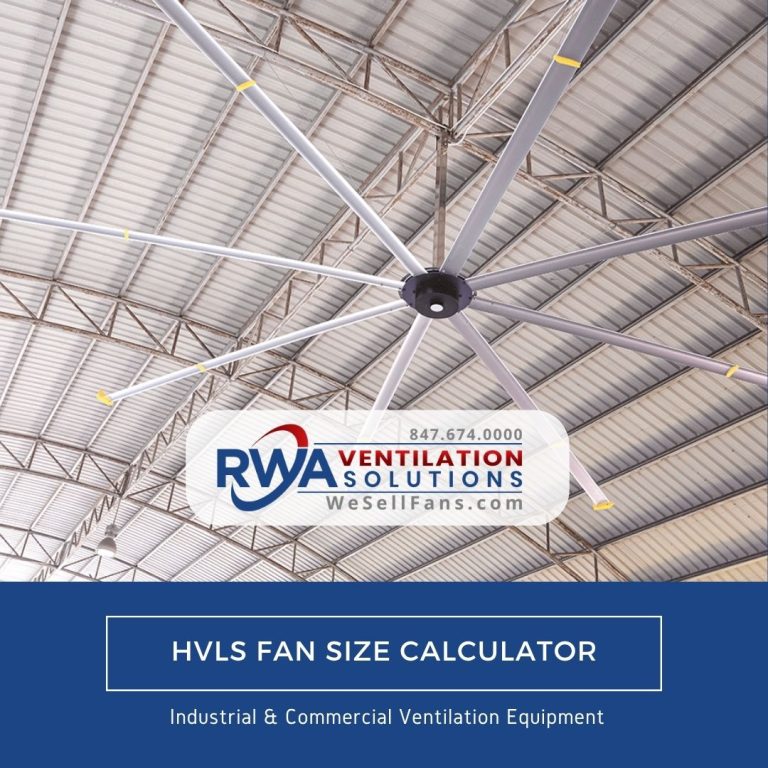
HVLS stands for high volume, low speed. These fans move a lot of air slowly, which lets one fan cover a wide floor. We carry sizes from 8 feet to 24 feet across.
A bigger fan turns slower than a small one. That is why one large fan can do the work of several small fans. It also runs quieter.
Warm air rises and sits near the ceiling. In winter, run the fan slowly to push that heat back down to where people work. During summer, run it faster to move air across the floor. The same fan does both jobs.
HVLS fans save money in two ways. They cut what you spend on heat in winter, and what you spend on cooling in summer.
In winter, the fan pushes warm air down from the ceiling. Buildings that do this cut heating costs by about 30%. In summer, every degree the fan makes a room feel cooler saves about 4% on cooling.
One HVLS fan can replace up to 20 floor fans. That means less equipment to buy and less to keep running. Most buildings make the money back in 6 to 18 months.
Operational Cost Analysis
Distribution centers that install HVLS fans report about 25% lower energy bills each year. Factories see a second gain. Workers stay more comfortable, so fewer of them quit.
A good HVLS fan lasts 15 to 20 years with normal maintenance. You buy it once, and it keeps working for a long time.
Tell us your ceiling height, your floor area, and what sits on the floor below. Our engineers will size the fan and the number of units. We also check the sprinkler layout and your electrical service before you order.
We do that part for you.
Send us your numbers and we will come back with a fan size and a quote.